
Mind · Think
The thinking child.
Curiosity comes first. Children read deeply, ask better questions, and learn to sit with a problem until they understand it. The CBSE curriculum is taught with rigour—and the patience to let a child think.
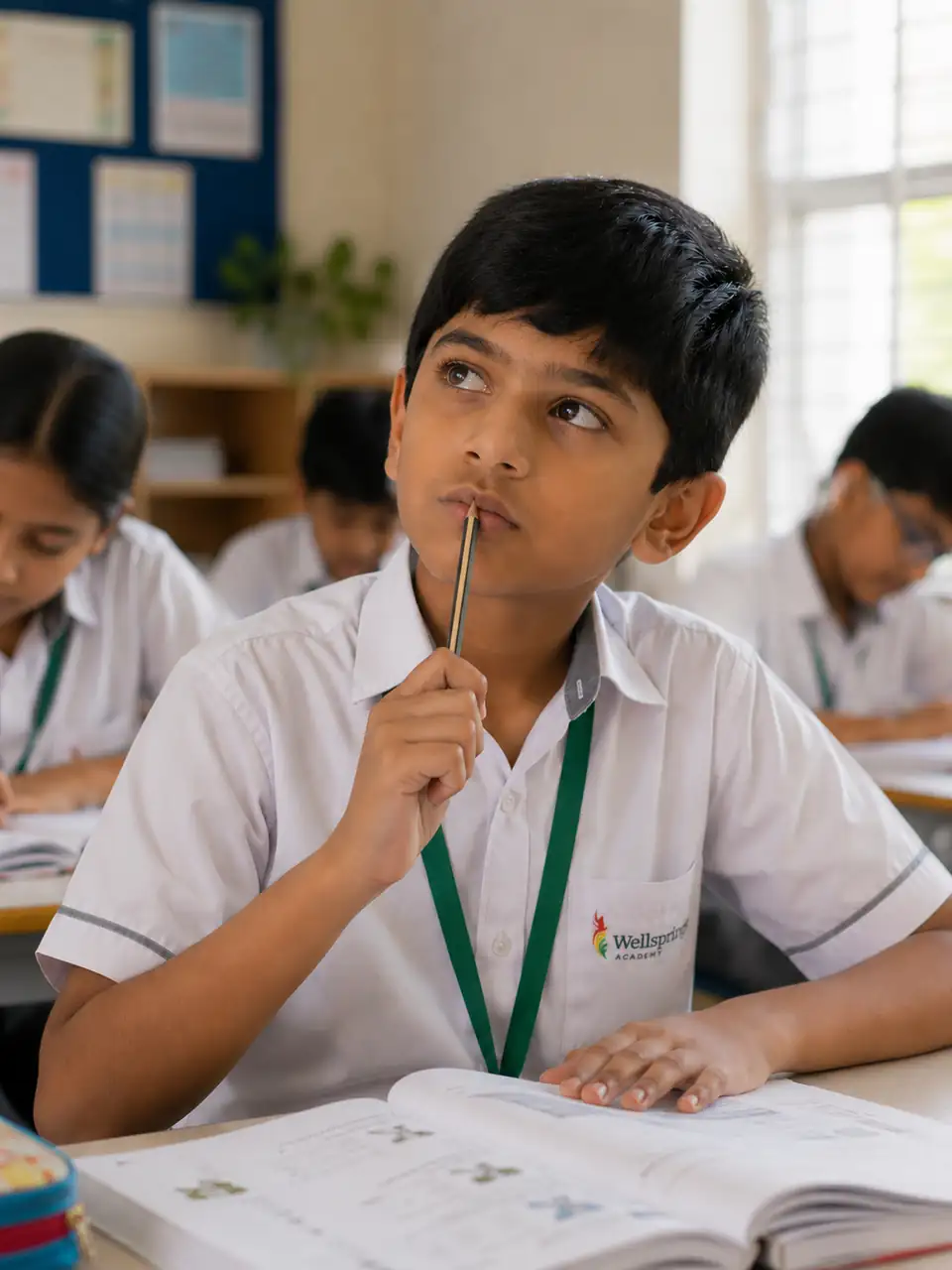
At Wellsprings, education is more than a syllabus. We teach the CBSE curriculum with depth, shaping the child alongside it—how they think, what they make, and how they treat others.
Our promise to your child
Think·Build·Belong
Think, Build and Belong are not subjects or departments. They are three simultaneous truths for every child—a mind making sense of the world, a body learning by doing, and a heart needing to be known. A school attending to only part of this is doing only part of its job.
Curiosity comes first. Children read deeply, ask better questions, and learn to sit with a problem until they understand it. The CBSE curriculum is taught with rigour—and the patience to let a child think.
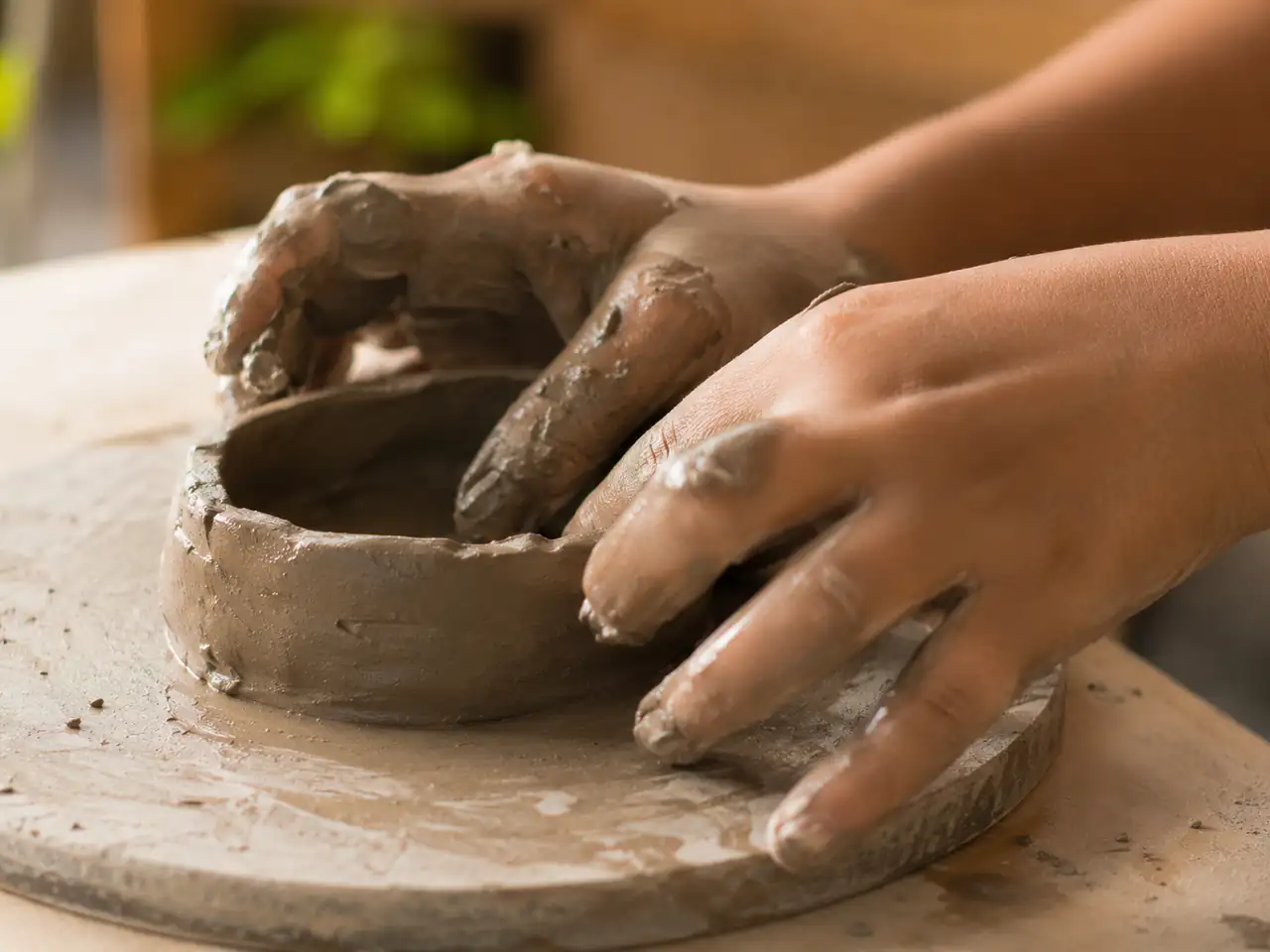
Hands, body, voice. Maker, sport, music, theatre — taught by specialists, not in borrowed corners. Children leave us having made things and knowing the satisfaction of seeing something difficult through.
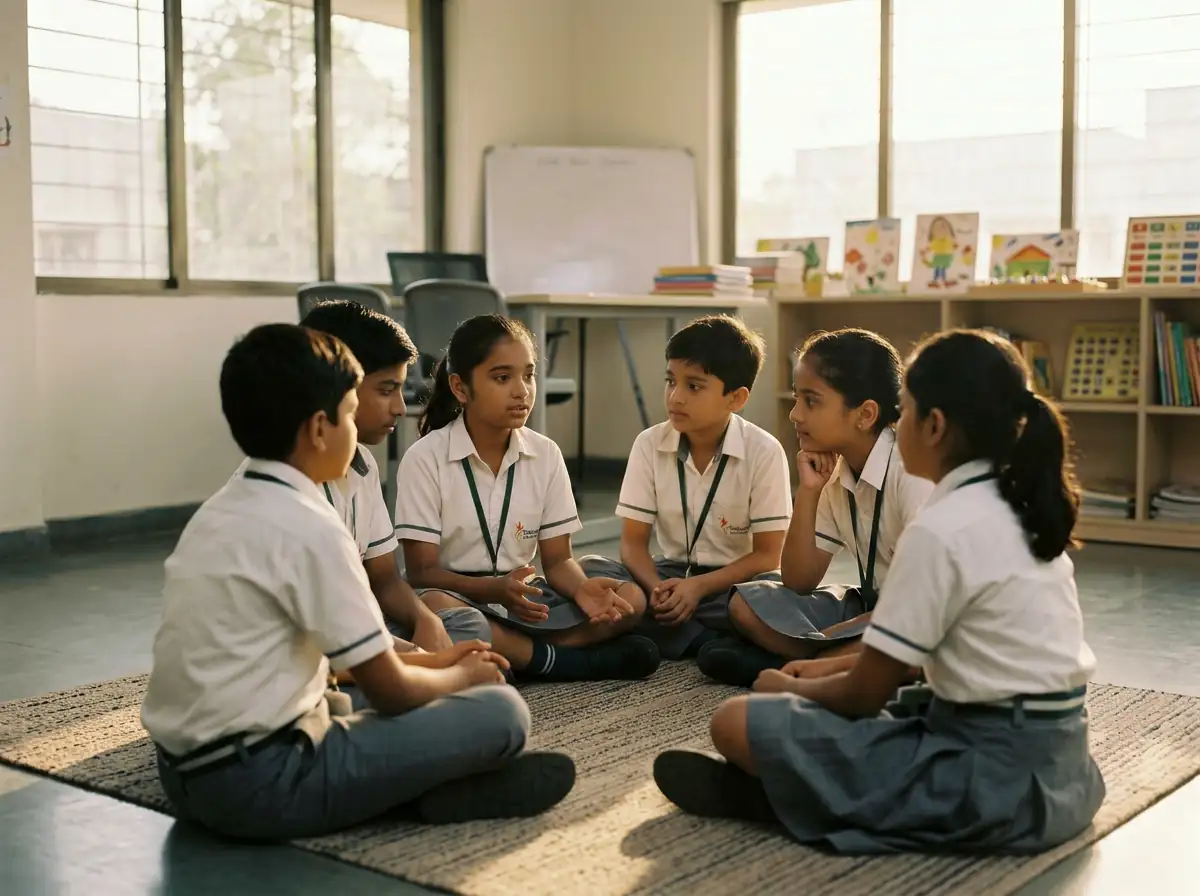
Every child is known by name. A mentor teacher who knows them through the year, a daily circle, kindness named out loud. The heart is curriculum here, not a poster on the wall.
A philosophy is only as real as the choices it forces. These are the three we make every day, in every classroom, before any lesson begins.
A unit opens with a wonder wall, not a worksheet. Children ask first, the textbook follows. When the answer arrives, they are ready for it.
Music, sport, art, and theatre are taught by specialists. Nothing about the body or the imagination is treated as a gap between 'real' subjects.
Kindness, friendship and conflict aren't pastoral add-ons. They're taught, named, practised—children learn to hold the room for each other, with a teacher quietly in it.
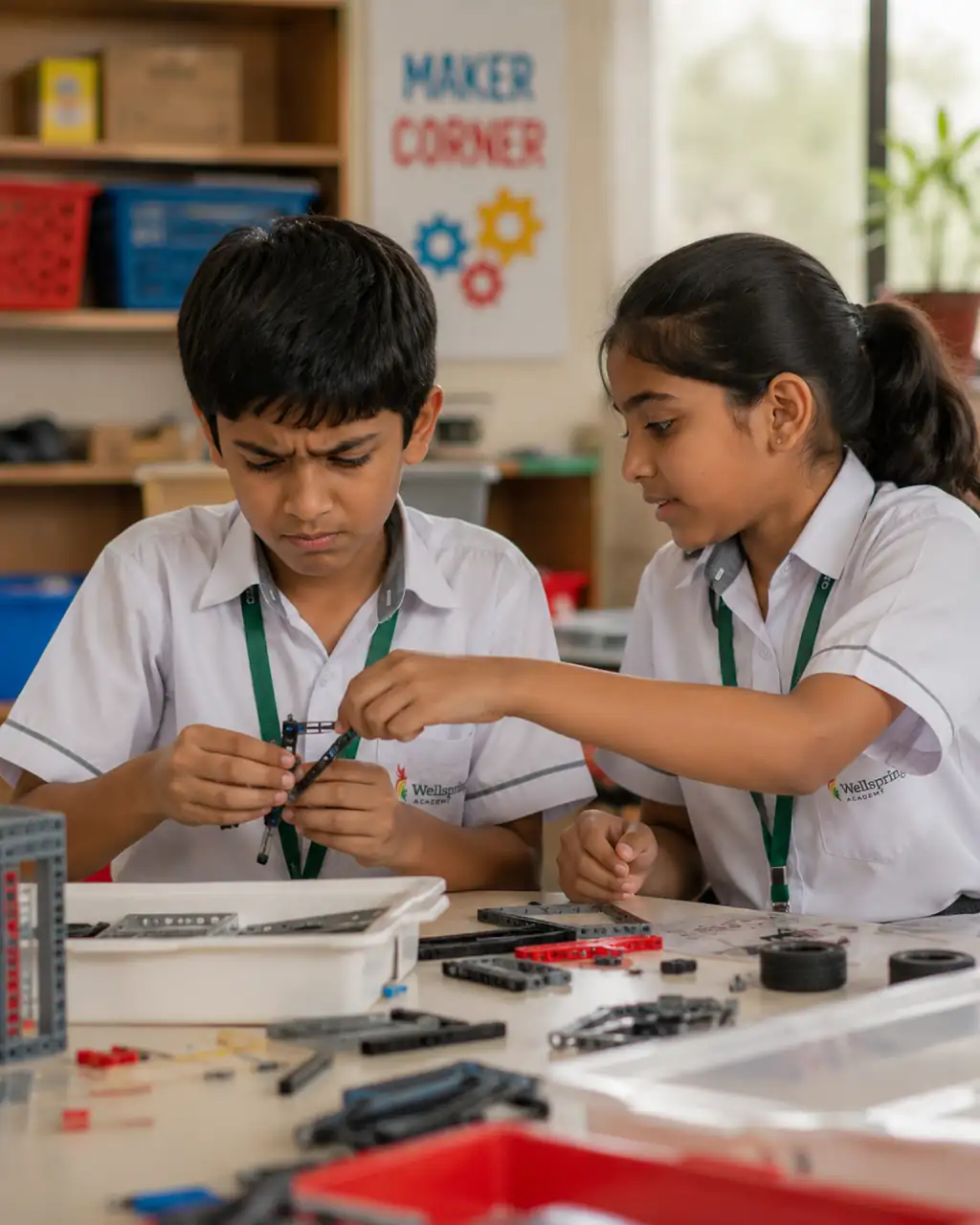
Each unit is built so that something is thought through, made, and shared. A history unit ends in a debate; a science unit in a build. A language unit ends in writing the class reads to each other.
A report card is a thin description. We use it—as CBSE requires—but never mistake it for the whole picture. Here is what we watch for alongside the number.
We keep earlier attempts; the distance between draft one and draft three is where learning shows.
A child is measured against where they were in June, not against the child at the next desk.
Persistence, kindness, or the question asked when no one else would—these are named in parent notes because they count as much as any score.
Classrooms with light. Corridors that breathe. Outdoor space for running. Sport, music and making have dedicated rooms, not borrowed corners.
A library that is used, not displayed. Reading nooks and quiet corners that aren't a punishment.
A maker room, sport fields, music and theatre rooms—all led by specialists.
Open courtyards, mixed-age corridors, and the daily circle that opens and closes the day.
Parent notes follow one rule: three beats—what your child thought,built, and belonged to. No scores or adjectives. Just the week, told honestly.
"This week Aanya kept asking why the moon changes shape. She built a small flipbook to show it. On Wednesday she sat with a new student through lunch."
"Vihaan stuck with the bridge model long after the others had moved on. It collapsed twice. The third one held three textbooks. He didn't say much — he just nodded and put it on the shelf."
"Meher noticed Arjun was quiet at lunch and went and sat with him without being asked. They came back to class together. Small thing. Worth writing down."
"Ira wasn't happy with her first draft of the essay, so she rewrote it over the weekend. The second one was sharper, and she could tell you why. That's the part we wanted."
"Kabir led circle this week. He held a hard conversation between two friends and didn't rush it. The room stayed with him until they sorted it out."
You can't feel how a school treats children from a page. Come for a morning; the philosophy will either ring true or it won't.